
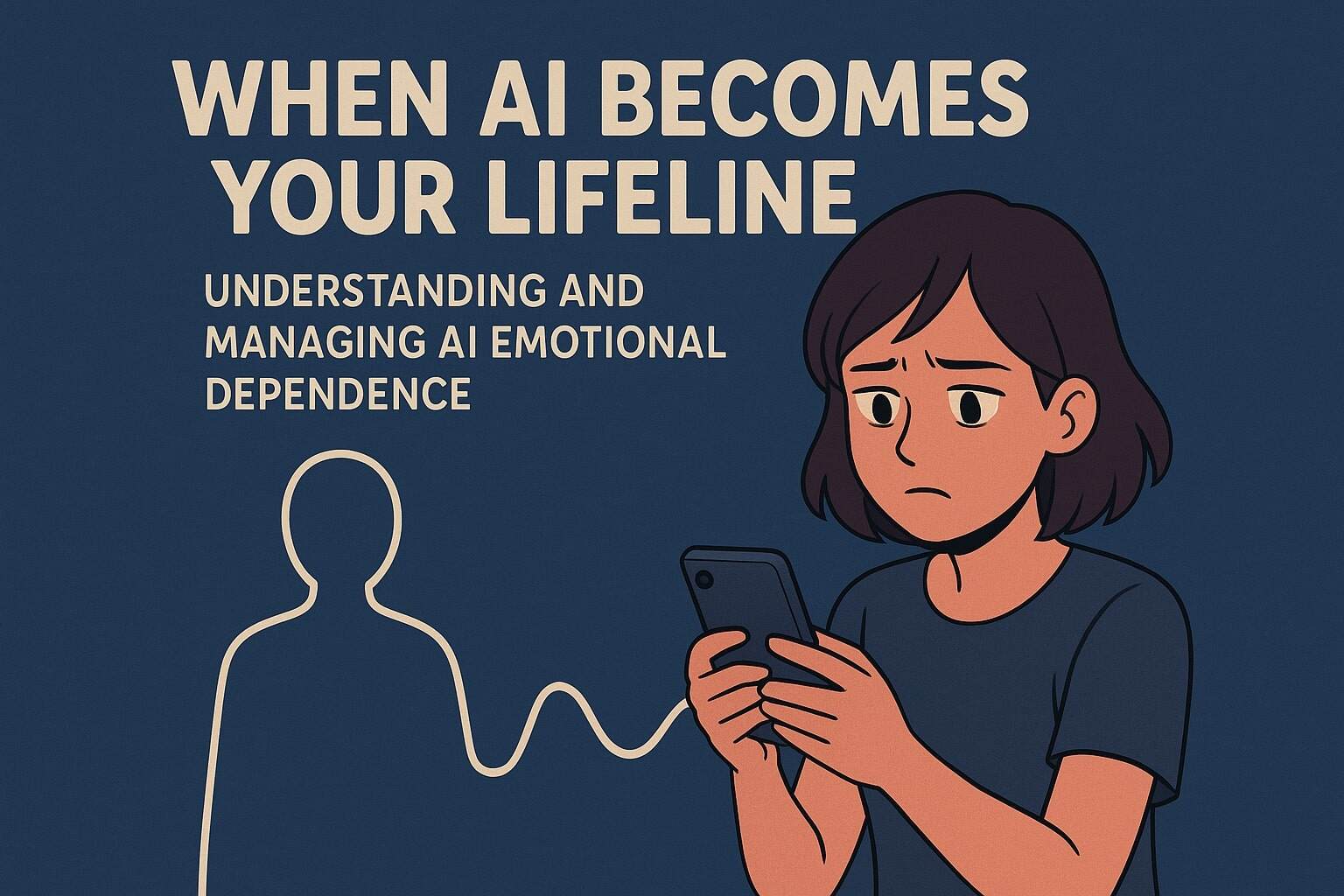
Something interesting is starting to happen.
Many people now use AI without even realising how often they rely on it during the day.
We ask AI to:
- write messages
- improve photos
- suggest captions
- summarise information
- organise ideas
- answer questions
- generate content
- recommend what to watch next
And because these tools are becoming faster and easier to use, it’s natural for people to depend on them more over time.
But recently I started wondering:
Are we slowly becoming too dependent on AI already?
To be clear, I don’t think AI itself is bad.
In fact, many AI tools are genuinely useful.
They save time.
Reduce frustration.
Help people learn faster.
And make technology easier for ordinary users.
For someone running a small business, creating content, studying, or managing daily tasks, AI can feel like having an extra assistant available at any time.
That’s a major reason why adoption is growing so quickly.
But at the same time, I think there’s a balance people need to stay aware of.
Because the easier technology becomes, the easier it is to stop thinking independently.
For example, many people now ask AI questions before even trying to research or think through something themselves. Others rely heavily on AI-generated writing without properly checking accuracy or adding their own voice.
Even social media algorithms increasingly influence:
- what people watch
- what they believe
- what opinions they see most often
And most of this happens quietly in the background.
That’s where the conversation becomes more interesting.
Not because AI is “taking over,” but because convenience can gradually shape human behaviour without people noticing.
The truth is, human beings naturally move toward things that save effort.
That’s normal.
If a tool makes life easier, faster, or smoother, people will use it more.
But there’s a difference between using technology as support… and becoming overly dependent on it.
Personally, I think AI works best when it helps people think better — not when it replaces thinking altogether.
For example:
- using AI to brainstorm ideas = useful
- using AI to completely replace judgement = risky
The same applies to creativity.
AI can help generate ideas, structure content, or improve productivity. But human perspective, emotion, experience, and originality still matter.
And perhaps that’s one of the biggest questions society will face over the next few years:
How do we benefit from AI without losing too much independence in the process?
Because whether people realise it or not, AI is becoming more integrated into everyday life very quickly.
Not just in obvious ways.
But quietly.
Inside phones.
Apps.
Search engines.
Social media.
Shopping platforms.
Customer support systems.
Photo editors.
Navigation apps.
In many cases, people are already interacting with AI dozens of times per day without thinking about it.
And honestly, that’s probably only the beginning.
Personally, I don’t think the solution is fear.
AI is clearly here to stay.
But I do think awareness matters.
The more people understand how these systems influence daily habits, decisions, and behaviour, the more wisely they can use them.
Because technology is most powerful when people stay in control of how they use it.
Not the other way around.
If you missed the previous post, you can read it here:
👉https://shorturl.at/mApiw
If you need help understanding AI tools or want simple prompts to get started, feel free to message me — I’ll respond as soon as I can 👍
Curious — do you think AI is mainly helping people become more productive… or making people too dependent on technology?
No comments:
Post a Comment