
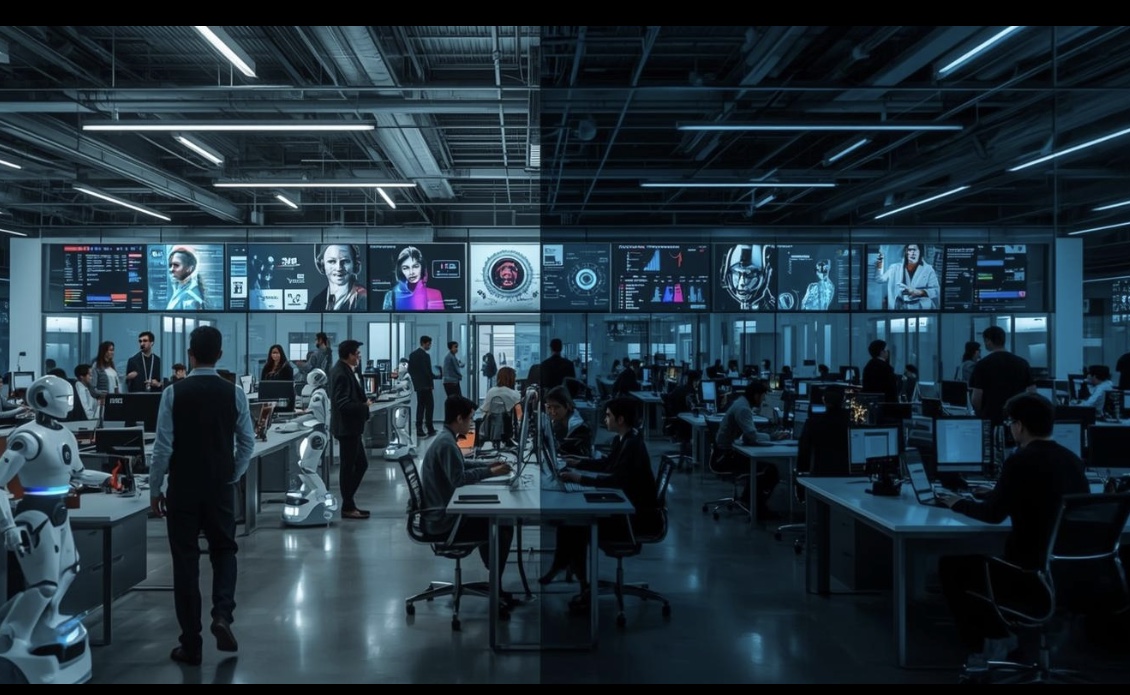
One of the most talked-about AI discussions this week came from Rich Dad Poor Dad author Robert Kiyosaki.
In a recent post discussing layoffs and artificial intelligence, Kiyosaki argued that people who continue to “think like employees” may struggle as AI becomes more integrated into workplaces. He suggested that those who learn how to use AI effectively may have a major advantage in the future. (mint)
And honestly, whether people agree with him or not, the conversation itself reflects something very real that is already happening.
AI is no longer just a futuristic concept.
It’s already entering:
- offices
- customer service
- marketing
- administration
- research
- design
- content creation
- and everyday workplace systems
Many companies are now exploring how AI can reduce repetitive tasks, improve speed, and lower operational costs.
That naturally creates anxiety for many workers.
Because whenever technology changes how work is done, people begin asking difficult questions:
“Will my job still exist?”
“Will companies need fewer people?”
“Will AI eventually replace certain roles completely?”
And to be fair, some industries are already beginning to feel those changes.
For example, some businesses are now using AI tools to:
- draft reports
- answer customer questions
- summarise meetings
- create marketing content
- organise schedules
- and analyse large amounts of data faster than before
Tasks that once took hours can now sometimes be completed in minutes.
That doesn’t necessarily mean humans disappear from the process.
But it does mean the expectations around productivity may start changing.
And I think that’s the more important point people should pay attention to.
Historically, technology has often replaced tasks before replacing entire jobs.
Calculators didn’t eliminate accountants.
Computers didn’t eliminate offices.
The internet didn’t eliminate businesses.
But all of those things changed how people worked.
AI may end up doing something similar.
The workers who adapt may become significantly more efficient than those who ignore the shift completely.
At the same time, I also think some AI discussions online become too extreme.
There’s a difference between:
- AI assisting work
and
- AI fully replacing human judgement
Because despite all the progress, AI still:
- makes mistakes
- misunderstands context
- produces inaccurate information
- and requires human oversight
That’s why many companies are currently using AI more as a support tool rather than a complete replacement.
Interestingly, even researchers studying workplace AI have found that many workers see AI mainly as a way to reduce repetitive tasks while humans continue reviewing the final output. (arXiv)
Personally, I think the biggest mistake people can make right now is either:
- blindly fearing AI
or
- blindly trusting it
The smarter approach may simply be learning how it works and understanding where it can genuinely help.
Because whether people like it or not, AI is increasingly becoming part of modern work environments.
And perhaps the real advantage in the future won’t belong to people who compete against AI…
but to people who learn how to work alongside it effectively.
---
If you missed the previous post, you can read it here:


No comments:
Post a Comment